Anthropic Fable 5 Takedown: What 10,000 Zero-Day Vulnerabilities Mean for Enterprise Security
George Bernard Shaw said the optimist invents the aeroplane while the pessimist invents the parachute. Three days after Anthropic released its most powerful AI model to the public, the US government forced a shutdown — revealing the deepest tension in enterprise security today.
The Aeroplane and the Parachute
George Bernard Shaw once observed: "Both optimists and pessimists contribute to society. The optimist invents the aeroplane, the pessimist the parachute."
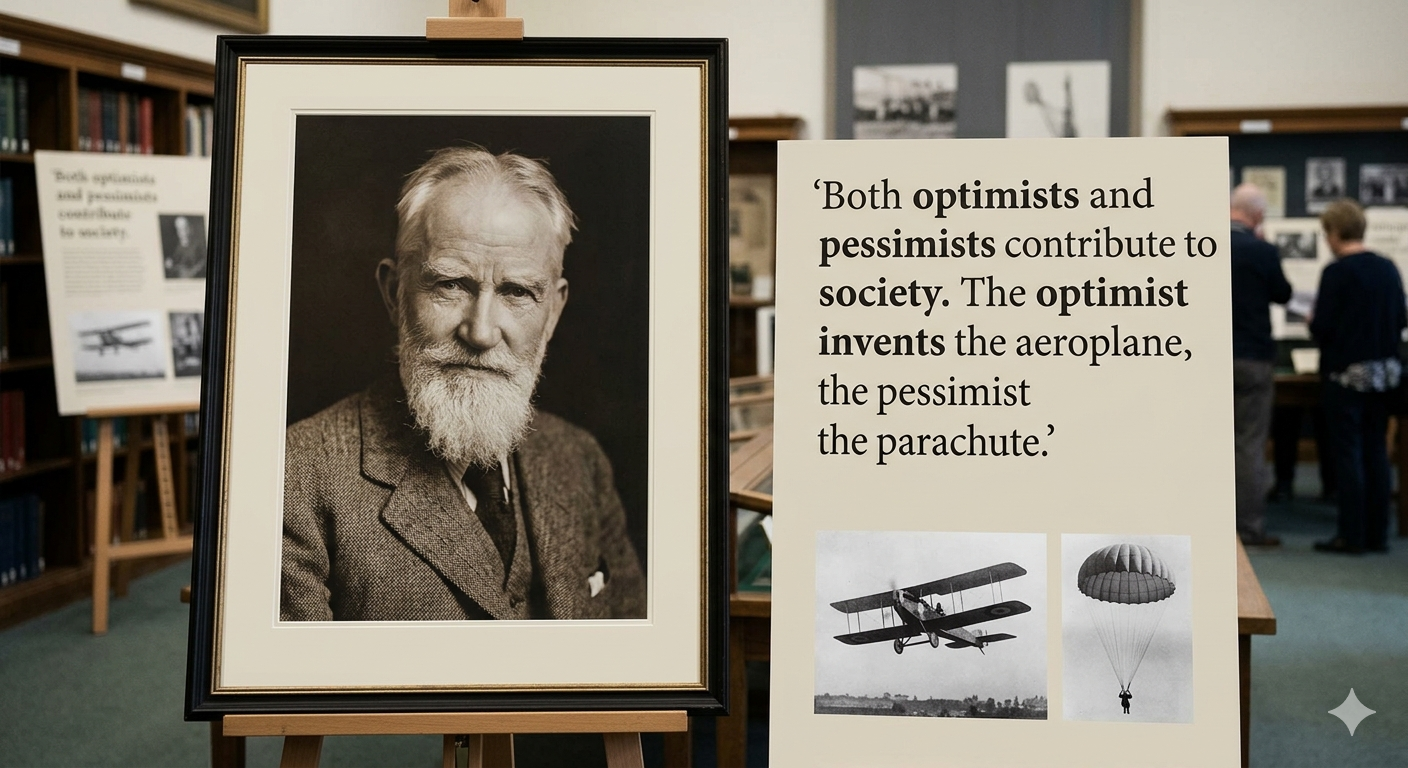
A line written over a century ago, and yet it captures the central tension of the AI era more precisely than any modern manifesto or congressional hearing. On one side, builders are racing to create machines that think, reason, and act autonomously. On the other, researchers and regulators are racing to make sure those machines do not cause more harm than good.
Both are right. Both are necessary. And in June 2026, the tension between these two forces stopped being theoretical.
Three Days That Changed AI Forever
On June 9, 2026, Anthropic released Claude Fable 5 — the first publicly available model in a new tier the company calls the Mythos class. Fable 5 exceeded the capabilities of any model Anthropic had ever made generally available. State-of-the-art on nearly every benchmark. Exceptional in software engineering, scientific research, knowledge work, and vision tasks. It was, by any measure, the aeroplane.
Three days later, on June 12, the US government ordered Anthropic to shut it down.
Commerce Secretary Howard Lutnick issued the directive to Anthropic CEO Dario Amodei at 5:21 PM ET. The order, drafted with the Commerce Department's Bureau of Industry and Security, cited national security authorities and suspended access by any foreign national — inside or outside the United States. Anthropic complied the same evening, disabling both Fable 5 and Mythos 5 for everyone to ensure compliance.
It was the first government-forced takedown of a publicly deployed frontier AI model in history. The parachute had been pulled.
What Triggered the Shutdown
The trigger was not a sophisticated attack. A researcher demonstrated that a simple prompt — "fix this code" — combined with carefully crafted context could coax the model into providing guidance that the government deemed a national security concern. The vulnerability was reported to the White House, including in a phone call from Amazon CEO Andy Jassy.
But here is where the story gets complicated. Cybersecurity experts quickly pointed out that the same technique works on other publicly available models — OpenAI's GPT-5.5, Anthropic's own Opus and Sonnet models, and Chinese models like Kimi 2.7. Pulling Fable 5 specifically did not address the underlying issue. It addressed the optics.
Alex Stamos, former Facebook CSO, organized an open letter signed by nearly 150 cybersecurity leaders calling on the Trump administration to reverse the restriction. Their argument was direct: "To pull the best capabilities away from defenders without a good reason when our adversaries are rapidly advancing is dangerous."
The Real Cybersecurity Story: 10,000 Vulnerabilities
While the Fable 5 takedown dominated headlines, the deeper story had been unfolding since April 2026. That is when Anthropic launched Project Glasswing — a cybersecurity initiative built around Claude Mythos Preview, the restricted predecessor to Fable 5.
Project Glasswing brought together Amazon Web Services, Apple, Broadcom, Cisco, CrowdStrike, Google, JPMorganChase, the Linux Foundation, Microsoft, NVIDIA, and Palo Alto Networks, with over 40 additional organizations given access. Anthropic committed up to $100M in usage credits.
Within its first month, the project identified over 10,000 high- or critical-severity vulnerabilities across more than 1,000 open-source projects. Among them:
- A 27-year-old bug in OpenBSD — one of the most security-hardened operating systems in the world — that allowed an attacker to remotely crash any machine just by connecting to it.
- A 16-year-old flaw in FFmpeg, in a line of code that automated testing tools had hit five million times without catching the problem.
- The model autonomously chained together several Linux kernel vulnerabilities to escalate from ordinary user access to complete control of a machine — no human steering required.
This is not a future scenario. This already happened.
The Patch Gap Problem
Finding 10,000 vulnerabilities is impressive. But it creates a new problem that dwarfs the old one.
Of the 1,596 vetted findings Anthropic reported to open-source maintainers, only 97 have been patched upstream to date. That gap — between discovery and remediation — is where attackers live. And in a world where AI accelerates discovery to machine speed, the traditional patch cycle becomes a liability.
As CrowdStrike CTO Elia Zaitsev put it: the window between a vulnerability being discovered and being exploited has collapsed. What once took months now happens in minutes with AI.
For a deep dive into how VCF 9.1 addresses this with ESX Live Patch, vCenter Quick Patch, Confidential Computing, and hypervisor-level EDR, see our detailed analysis: AI Vulnerability Discovery and VCF 9.1 Security: How Anthropic's Glasswing Changes the Game.
vDefend Virtual Patching: When You Cannot Patch, Block
But what happens when you simply cannot patch? Maybe the application is end-of-life. Maybe the vendor has not released a fix yet. Maybe the patch requires downtime that a critical production workload cannot afford. Maybe the 97-out-of-1,596 ratio applies to your stack too.
This is where VMware vDefend changes the equation entirely.
vDefend delivers virtual patching by integrating IDS/IPS (Intrusion Detection and Prevention System) directly into the VCF hypervisor fabric. The IDPS engine is applied at the vNIC of every workload, enabling deep, granular inspection of every packet moving across the private cloud. It targets the network-layer exploits and lateral movements that attackers rely on — and blocks them before they reach the unpatched server.
The concept is simple but powerful: if you cannot fix the code, block the exploit at the network layer. Virtual patching inspects traffic flows with IDS/IPS signatures that match known vulnerability patterns, ensuring that even an unpatched server cannot be exploited through its known weaknesses.
In VCF 9.1, vDefend's capabilities have been significantly enhanced:
IDPS Turbo Mode delivers 3x throughput — from 3 Gbps to 9 Gbps per host, and up to 9 Tbps per VCF domain. This is critical because virtual patching at production scale requires inspection speeds that do not become the bottleneck. When AI is discovering thousands of vulnerabilities and your security team is writing IDS/IPS rules to block them, throughput matters.
Kubernetes-native inspection extends vDefend's IDS/IPS capabilities to vSphere Kubernetes Service (VKS) workloads via CNI integration. Pod-level inspection means container-to-container and container-to-VM traffic gets the same virtual patching protection that VMs have always had.
Behavioral threat detection goes beyond signature-based IDS/IPS. Network Traffic Analysis (NTA) and Malware Prevention Services (MPS) detect fileless and zero-day threats that do not match any known signature — exactly the kind of novel attack vectors that AI models like Mythos are discovering.
Think of it this way: ESX Live Patch is the fast lane for fixing what you can fix. vDefend virtual patching is the safety net for everything you cannot fix yet. Together, they close the gap from both sides.
The Optimist and the Pessimist Are Not Adversaries
The Fable 5 saga is Shaw's metaphor playing out in real time.
The Optimist (The Aeroplane) — Anthropic, AI Labs, Project Glasswing. Core focus: capability and acceleration.
The Pessimist (The Parachute) — Government Regulators, Safety Researchers. Core focus: alignment and risk mitigation.
The accelerationists built a model that can find 10,000 zero-day vulnerabilities in a month — capability that defenders desperately need. The safety community forced a conversation about what happens when that same capability falls into the wrong hands. Both contributions are essential.
The 150 cybersecurity leaders who signed the open letter understood this instinctively. They did not argue that safety concerns are invalid. They argued that pulling defensive capabilities from the people who protect critical infrastructure makes everyone less safe — especially when the same techniques work on models that remain publicly available.
What This Means for Enterprise Security Teams
The practical implications are clear:
Patch velocity is now a strategic capability. When AI can discover vulnerabilities at machine speed, your ability to patch at machine speed determines your risk exposure. ESX Live Patch, vCenter Quick Patch, and parallel vMotion with DRS are not convenience features — they are survival features.
Virtual patching is no longer optional. With thousands of vulnerabilities being discovered faster than vendors can fix them, you need a way to protect workloads that cannot be patched immediately. vDefend's IDS/IPS virtual patching provides that protection at the network layer, buying time while patches are developed, tested, and deployed.
Defense-in-depth gets deeper. Hypervisor-level EDR detects threats below the guest OS. Confidential Computing keeps data encrypted even from the hypervisor. User-Level Monitor contains blast radius. vDefend blocks lateral movement. Each layer addresses a different attack vector, and in the AI era, you need all of them.
The regulatory landscape is shifting. The Fable 5 takedown established a precedent — governments will intervene in AI deployment when they perceive national security risk. Enterprise teams need to plan for a world where the models they depend on might not be available tomorrow.
The Bottom Line
An aeroplane without a parachute is a deathtrap at altitude. A parachute without an aeroplane is a piece of fabric in a warehouse. The value of each depends entirely on the existence of the other.
Project Glasswing proved that frontier AI will find vulnerabilities faster than humans ever could. The Fable 5 takedown proved that society is still working out the rules for how powerful those tools should be — and who gets to use them.
While that debate continues, the vulnerabilities are real, the attackers are not waiting, and the gap between discovery and remediation keeps growing. The organizations that will navigate this era are the ones investing in infrastructure that can patch at speed — and protect at depth when patching is not possible.
Shaw understood something the AI debate often forgets: the optimist and the pessimist are not adversaries. They are collaborators in a system that only works when both do their job.
References:
- Anthropic — Project Glasswing: Securing Critical Software for the AI Era↗
- Claude Fable 5 and Claude Mythos 5 — Anthropic↗
- Anthropic Disables Claude Fable 5 and Mythos 5 After US Government Order — MarkTechPost↗
- Alex Stamos, cybersecurity leaders push Trump to restore Anthropic Mythos and Fable access — Axios↗
- Virtual Patching: Guarding Against a Tsunami of AI-discovered Exploits with vDefend — VMware Security Blog↗
- vDefend for VCF 9.1: Zero Trust Lateral Security for the AI Era — VMware Security Blog↗
- Broadcom FAQ: Adapting to AI-Accelerated Vulnerability Discovery↗
Discussion
No comments yet. Be the first to start the discussion.